
Clear aligners
Clear, removable trays that move your teeth into a straighter position, step by step.
What it is
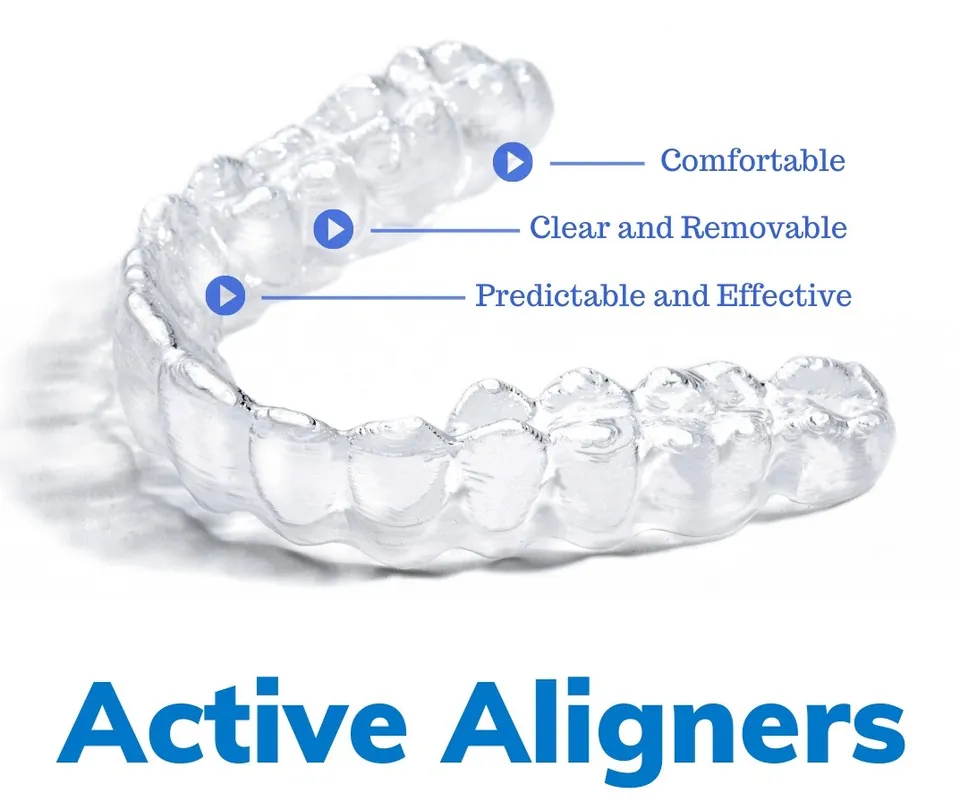
Clear aligners are thin, see-through plastic trays made to fit your teeth. You wear a series of them, and each set is shaped slightly differently, so your teeth are moved gradually towards their planned position.
We offer Active Aligners. Because the trays are clear, they are hard to notice, and you take them out to eat, to drink anything other than water, and to brush your teeth.
Is it right for me?
Aligners may suit adults and older teenagers with crowded teeth, gaps, or teeth that have moved over time, for example after braces when retainers were not worn.
They are not right for everyone. Some bite problems need a different treatment, and your teeth and gums need to be healthy before treatment starts. The dentist will examine you and tell you whether aligners are a suitable option.
What happens at the appointment
- At a consultation, the dentist examines your teeth and gums, talks about what you would like to change and checks whether aligners suit you.
- Records are taken, such as photos, X-rays and impressions or a scan of your teeth, so your treatment can be planned.
- You receive a treatment plan and a written quote before anything is ordered.
- Your aligners are made for your teeth. At the fitting appointment, the dentist checks the fit and shows you how to put them in and take them out.
- You move on to each new set of aligners as instructed and come in for check-ups so the dentist can follow your progress.
Recovery and aftercare
Wear your aligners for the number of hours a day the dentist advises. Your teeth only move while the aligners are in.
Take them out to eat and to drink anything other than plain water. Brush your teeth before putting them back in.
Clean your aligners the way the dentist shows you, and keep them in their case when they are out of your mouth.
A new set can feel tight for the first day or two. This usually settles.
When treatment ends, you will need to wear a retainer to help keep your teeth in their new position.
Common questions
How long does treatment take?
It depends on how much your teeth need to move. The dentist will give you an estimate after your consultation.
Do aligners hurt?
Each new set can feel tight or cause some pressure for a day or two. Most people get used to this quickly.
Can people see them?
The trays are clear, so they are hard to notice, but they are not completely invisible.
Can I eat with my aligners in?
No. Take them out to eat and to drink anything other than plain water, then brush your teeth before putting them back in.
Will I need a retainer afterwards?
Yes. Teeth can move back after treatment, so you'll need to wear a retainer as the dentist advises.
Does medical aid cover aligners?
Cover for aligners varies a lot between medical aid plans. We'll give you a written quote so you can check with your medical aid before you decide.
Costs and medical aid
We accept all medical aids and most RCS cards. Depending on your medical aid plan, some treatments may have a co-payment. We'll explain any costs before treatment starts.
Related treatments
Book an appointment
Choose your branch and send us a request, or WhatsApp us directly.